In brief
The cheapest way to arrive is by bus — FlixBus connects Kraków with dozens of cities across Poland and Central Europe from just a few euros. In the city itself you don’t need a car: the historic centre is compact and walkable. However, two sites — Auschwitz-Birkenau and the Wieliczka Salt Mine — require pre-purchased tickets or a booked tour: they sell out weeks in advance.
How to get there
From Warsaw, Wroclaw, Katowice, Prague, Vienna and Budapest, the easiest way to reach Kraków is by bus. FlixBus serves most routes, and tickets often work out cheaper than the train — especially when booked in advance. From Warsaw the bus takes around four hours; from Prague — eight to nine. If you want to compare bus, train and flight on a single screen, Omio is the most convenient way to do it.
Compare on Omio →
More on when a bus beats a train and how to find connections: trains and buses across Europe.
Do you need a rental car
If you’re coming to Kraków itself — no. The Old Town fits within less than two kilometres across, Kazimierz is five minutes on foot, and Wawel is literally at the foot of the city centre. There’s nowhere to park, and traffic in the tourist heart is restricted.
A car might be useful if you’re planning a day trip to Zakopane and the Tatras: stunning, but regular minibuses and coaches run there from the bus station, and an organised tour will save you the parking headache. If you still want the freedom, compare prices in advance.
Compare cars on Discover Cars →
What to check when renting and how to avoid hidden charges: car rental guide.
What to see and which tours to take
Kraków is one of the few Polish cities that World War II left almost untouched. That makes it both beautiful and exceptionally rich in history. The highlights:
- Auschwitz-Birkenau — 70 km from Kraków. A visit that is obligatory, heavy and important. You can get there independently by bus, but with a guide and transfer from Kraków the experience goes much deeper and is far easier to manage: a good guide provides context you won’t find on the information boards. Self-visit tickets on the museum website sell out weeks ahead in season; guided tours book up even faster.
- Wieliczka Salt Mine — 15 km from Kraków, a UNESCO World Heritage Site. Underground chambers several storeys high, a chapel carved entirely from salt, seven levels deep. Extremely popular: without a prior booking the queue can stretch for hours, or in peak season you simply won’t get in.
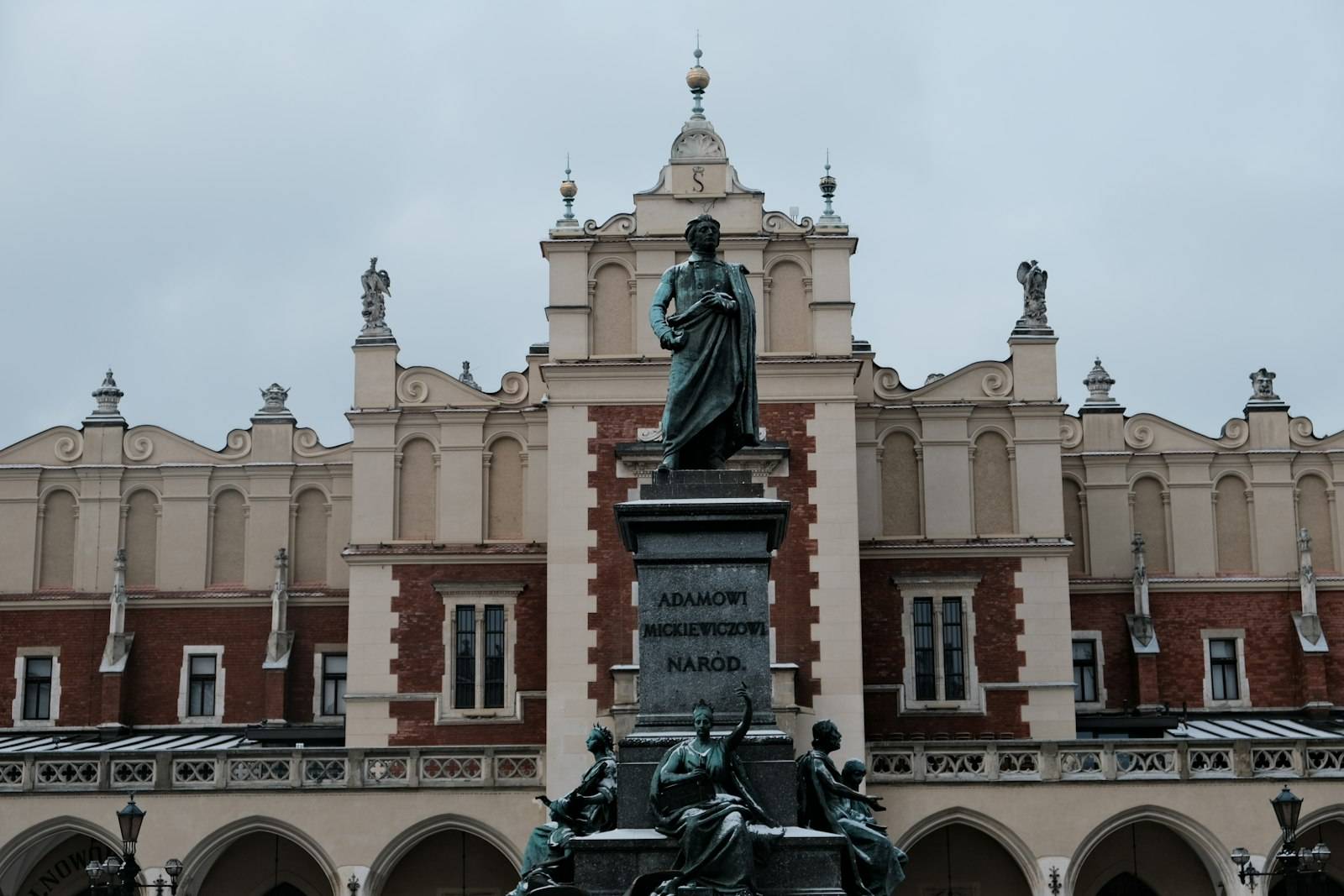
- Main Market Square and the Cloth Hall (Sukiennice) — one of the largest medieval market squares in Europe. You can spend hours here without any particular plan: the trumpeter in St Mary’s Basilica tower, basement cafes, amber shops.
- Wawel and the Jewish district of Kazimierz — Wawel Castle and Cathedral above the Vistula, and a little further down — Kazimierz with its synagogues, galleries and the city’s best street food.
For Auschwitz and Wieliczka, book tickets and tours well in advance — this is not an exaggeration. In peak season (May–September) available slots for the following week are nearly non-existent.
Browse tours on GetYourGuide →
How we choose platforms and what we check before making a recommendation: how we choose tours.
One practical note: to have tickets, maps and offline routes ready from the moment you land in Kraków, it’s convenient to install an Airalo eSIM in advance — it activates in five minutes from home.
FAQ
How many days do you need in Kraków?+
Three to four full days is ideal. Day one: Main Market Square, Wawel, Kazimierz. Day two — Auschwitz-Birkenau (half a day each way). Day three — Wieliczka Salt Mine. Day four can be spent in Zakopane or simply taking the city at your own pace. If you only have two days, choose between Auschwitz and Wieliczka: trying to fit both at that speed is too much.
How do you get to Kraków cheaply?+
Bus — the cheapest option. FlixBus connects Kraków with Warsaw (~4 h), Wroclaw, Prague (~8 h), Vienna and Budapest; tickets booked early cost just a few euros. To compare bus, train and flight in one place — Omio is convenient. Fast PKP Intercity trains from Warsaw also run, but are more expensive.
How do you get to Auschwitz and do you need to book in advance?+
Booking is essential — this is not an overstatement. Self-visit tickets on the museum website sell out weeks ahead in season (May–September). Guided tours from Kraków with a guide and transfer book up even faster: the guide provides context you won’t find on the information boards. You can get there independently by bus from Kraków’s main station (about an hour and a half). Without a prior booking in peak season you risk not getting in at all.
Is the Wieliczka Salt Mine worth it, and how do you get there?+
Yes, absolutely — it’s a UNESCO site with underground chambers several storeys high and a chapel carved from salt. Getting there independently is easy: a bus (minibus) from in front of Kraków’s main station takes around 30 minutes, ticket costs a few zloty. On-site ticket booths sell out quickly: in peak season the queue can stretch for hours. Book online in advance or take a tour from Kraków with the ticket and transfer included.
When is the best time to visit Kraków?+
May, early June and September — the sweet spot: warm, long days, fewer tourists than in July–August. July and August — peak season: everything is booked, tickets for Auschwitz and Wieliczka need to be reserved a month or more in advance. December is attractive for the Christmas market on Main Market Square, but some seasonal attractions are closed. Winter is generally cold, though accommodation prices drop.
Is Kraków expensive?+
No — by European standards Kraków remains very affordable. A cafe lunch in Kazimierz costs 30–50 złoty (around €7–12), a beer in a bar — 10–15 złoty. Entry to Wawel (main exhibitions) — around 30–40 złoty. The main expenses — Auschwitz (a guided tour with transfer: 100–150 złoty and up) and Wieliczka (admission ~109 złoty as of 2025). Central accommodation is significantly cheaper than in Prague or Vienna at the same standard.
What to see in Kraków in 2–3 days?+
In two days: day one — Main Market Square, St Mary’s Basilica, the Cloth Hall, Wawel Castle and Cathedral, an evening stroll through Kazimierz. Day two — Auschwitz-Birkenau (leave early, back for dinner). In three days, add Wieliczka Salt Mine on day three. If you want more — Podórze (the former ghetto, Schindler’s Factory) fits into day one or three without any rush.
What currency is used in Poland?+
The zloty (PLN). Euros are not officially accepted, though tourist spots sometimes take them — at an unfavourable rate. Best approach: withdraw zloty from an ATM on arrival or pay by card with zero currency-conversion fee. Exchange offices on Main Market Square offer a notoriously poor tourist rate — give them a wide berth.