Croatia road trip: driving the Adriatic coast.
7–9 days, one rental car, Europe's most beautiful coastline. Zadar, Krka National Park, Split, the island of Hvar, and Dubrovnik — a route that stays with you.
7–9 days, one rental car, Europe's most beautiful coastline. Zadar, Krka National Park, Split, the island of Hvar, and Dubrovnik — a route that stays with you.
The best way to see the Croatian coast is by rental car — trains don't reach here, and the national parks and island ferries demand your own wheels. Book a car on Discover Cars (lowest true final price, Full Coverage included), fly to Zadar or Split via Aviasales, grab an Airalo eSIM for offline maps, and set off with EKTA travel insurance in your pocket.
Compare cars on Discover Cars →The Croatian coastline is spectacular — and virtually impossible to explore without a car. The rail network connects only a handful of cities and bypasses all of Dalmatia; national parks like Krka and Plitvice sit far from any station, and the most beautiful coves are reached only by twisting cliff roads above the sea. A car gives you freedom: leave when you want, stop at every viewpoint, and catch the Hvar ferry on your own schedule.
Inside the cities themselves — Split, Dubrovnik — driving into the old town is prohibited (ZTL zones). You park outside and walk in, which is the best way to discover them anyway. The car is for moving between places; your feet are for exploring.
Below is a suggested 8-day itinerary. Drive times are point-to-point with no stops — in practice you'll stop far more often, because the scenery is too good to drive past.
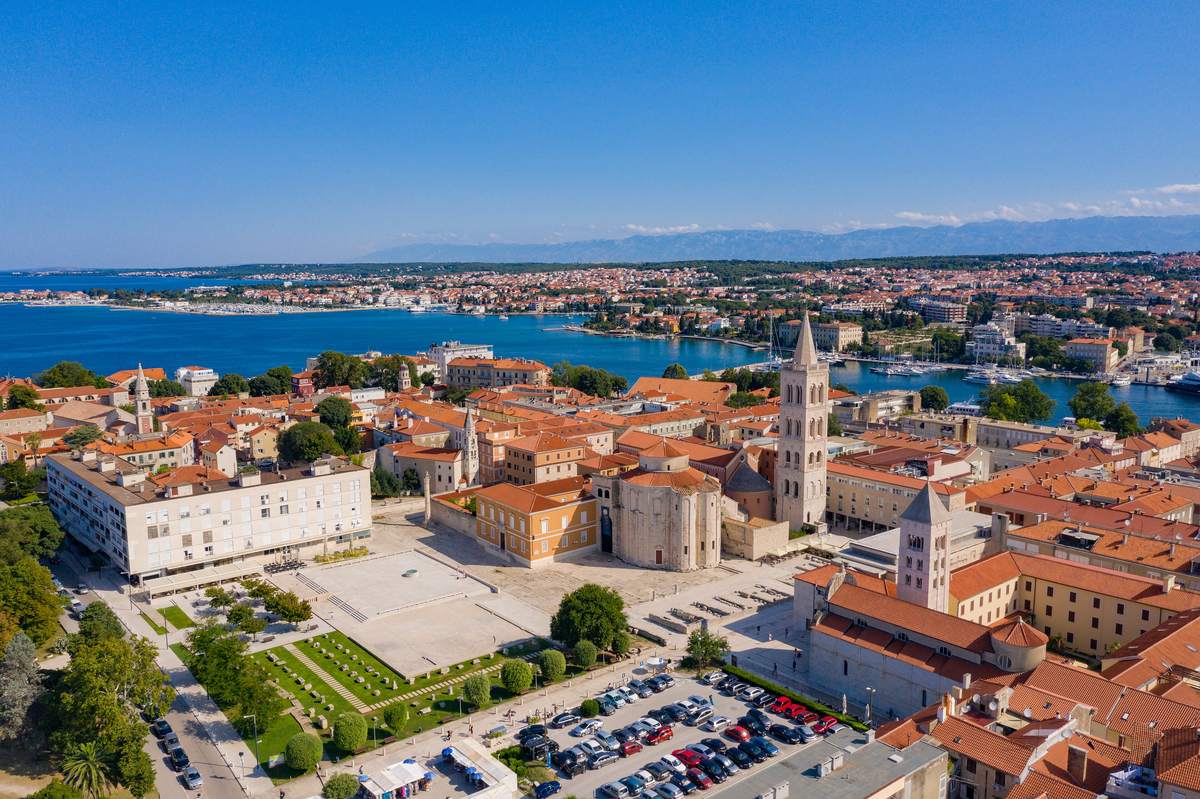
Fly into Zadar and pick up your car right at the terminal (Discover Cars has several suppliers here). Zadar is beautiful and underrated: the Sea Organ on the promenade, sunset over the old town, the best Dalmatian cheese at the market. Stay in the city or on the Zadar Riviera — significantly cheaper than Split or Dubrovnik.
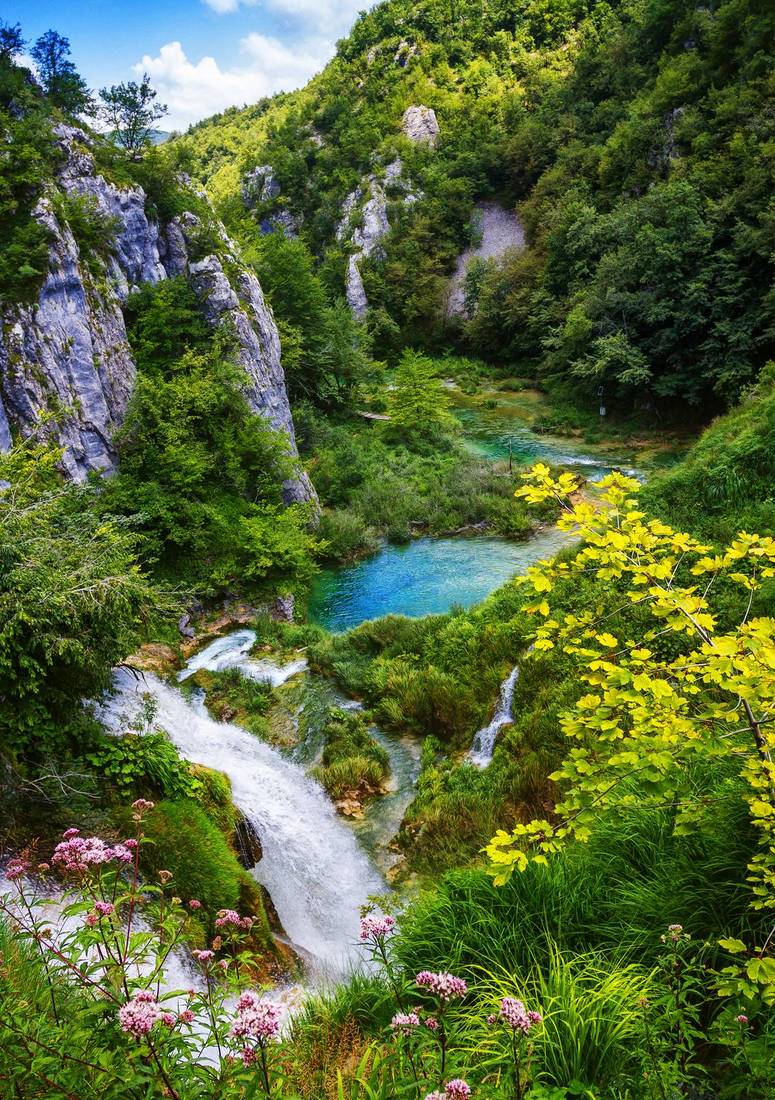
Leave early to beat the coach parties. Krka is famous for the emerald Skradinski Buk waterfalls and the quieter Roški Slap cascades — a far calmer alternative to Plitvice. Book park tickets in advance via GetYourGuide to skip the ticket queue. In the afternoon, head to Split — about 1 hr.
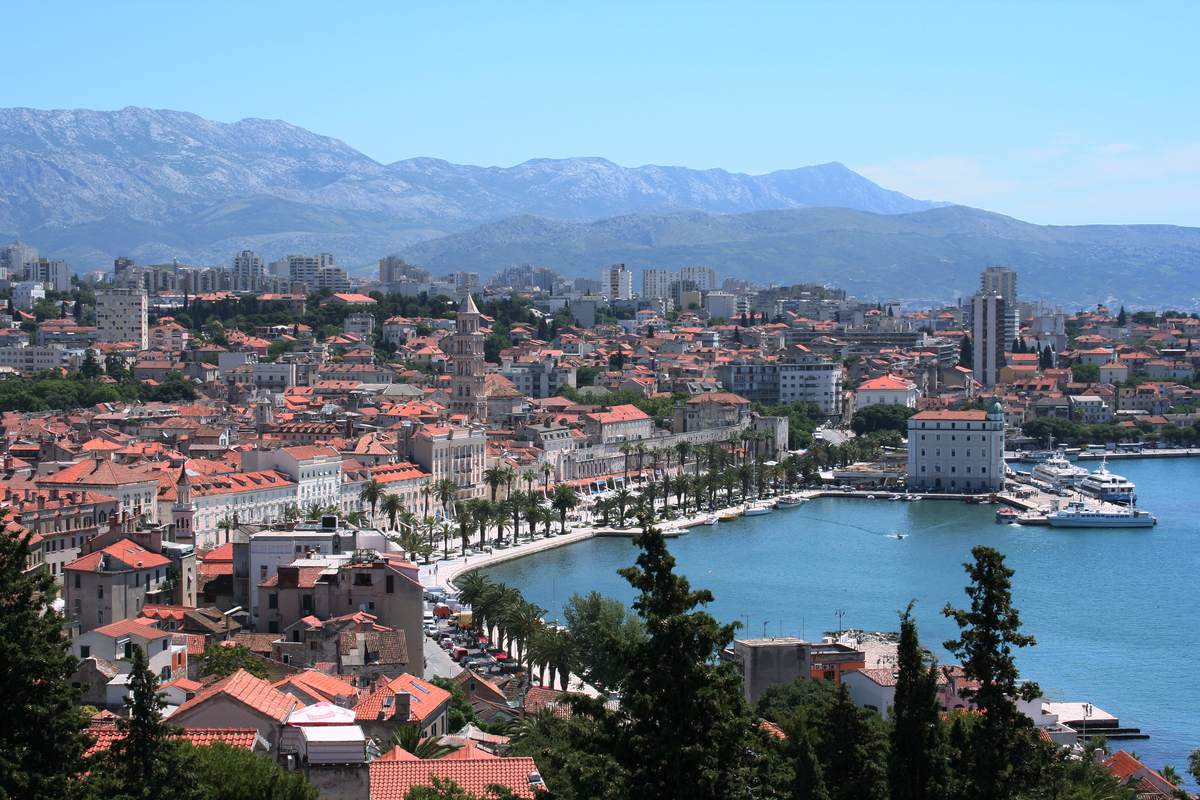
Park outside the old town (Brodarica or Gripe car parks, about €1.50–2/hr) and walk in. Diocletian's Palace is not a museum — it's a living city: restaurants, cafés, and shops squeezed between walls that have stood for nearly two thousand years. Use your second day to walk the Marjan peninsula or take the short ferry across to the island of Šolta. Evenings on the Riva promenade go on late.
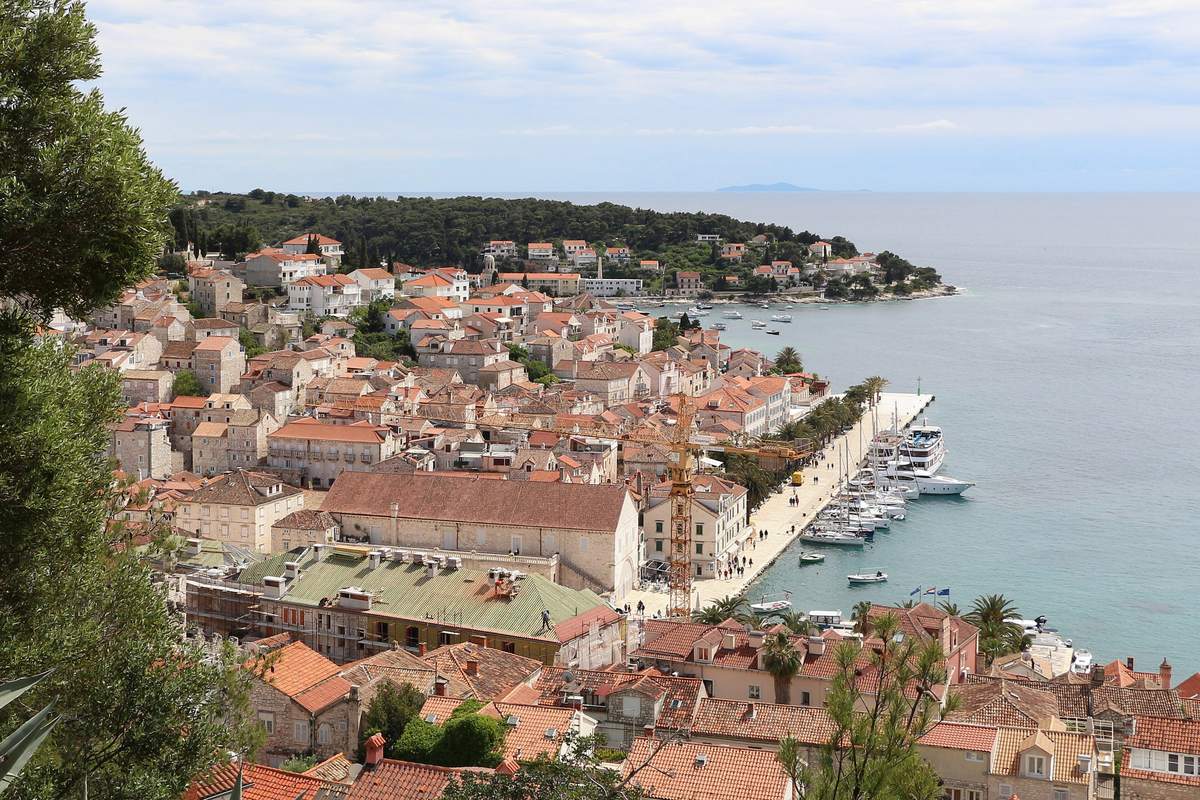
Jadrolinija car ferry from Split to Stari Grad on Hvar — about 2 hrs with a car; book at jadrolinija.hr (essential in summer, car spaces sell out days in advance). Hvar is an island of lavender, wine, and beautiful bays: hire a small boat for half a day to reach the Pakleni Islands just off the harbour. The town of Hvar has the finest Venetian piazza on the Adriatic. Accommodation is cheaper in the interior villages (Jelsa, Vrboska) than in Hvar town itself.
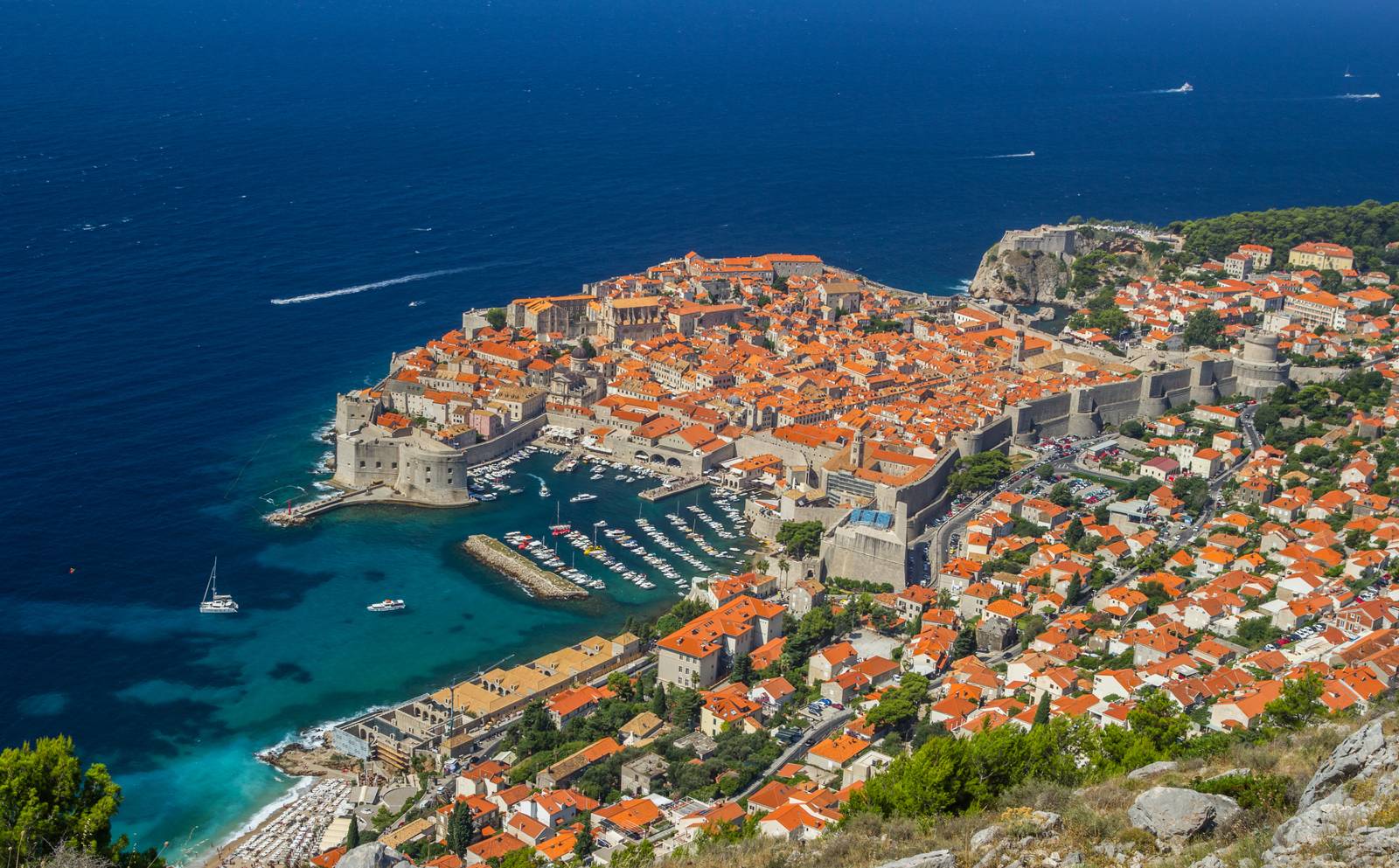
Take the return ferry to the mainland (Stari Grad → Split, or Drvenik → Ploče), then head south via the Pelješac Bridge over Bosnia (border crossing is fast, about 10 minutes). Dubrovnik: park at Ilijina Glavica or ride the cable car down and walk back up. The city walls are unmissable — book timed tickets through GetYourGuide; without a reservation in summer you can wait two hours at the gate.
| Item | Estimate (2 people, 8 days) |
|---|---|
| Car rental Discover Cars | €140–220 (including Full Coverage) |
| Fuel (approx. 700 km total) | €60–90 |
| Jadrolinija ferries (car + 2 passengers) | €60–100 |
| Motorways and vignettes | €20–35 |
| Total estimate | €280–445 |
Car prices in Croatia spike sharply in July and August. Book in advance on Discover Cars with free cancellation — you lock in a lower rate and can rebook if the price drops further.
Fly into Zadar or Split — both airports receive budget carriers from across Europe. Check prices on Aviasales, which aggregates all airlines and surfaces the cheapest combinations with and without layovers. With early booking, return flights often come in well under €100.
Pick up the car at the airport or in town — Discover Cars has suppliers at both. Keep in mind that Croatia is a manual-gearbox country; automatics cost more and sell out quickly, so book one early if you need it. Add Full Coverage when you book — far cheaper than counter insurance and it eliminates the excess, which matters on narrow island roads.
Croatian ferries are operated mainly by Jadrolinija (jadrolinija.hr). Car ferry spaces must be reserved in advance in summer — they sell out days ahead. Passenger-only ferries and catamarans to Hvar are cheaper and need no reservation, but then you leave the car in Split.
ZTL no-drive zones cover the historic centres of Split and Dubrovnik — cameras record plates automatically and the fine arrives by post. Car parks outside the zone cost around €1.50–2.50/hr. Visit the Adriatic coast in May–June or September: fewer crowds, lower prices, ideal temperatures. July and August are the busiest and most expensive months, especially on Hvar and in Dubrovnik. An Airalo eSIM is genuinely useful here — for offline navigation, the Jadrolinija app, and ferry timetables; island mobile coverage can be patchy, and roaming on a local SIM adds up. Take out EKTA travel insurance before you fly: it covers medical costs, flight delays, baggage, and trip cancellation.
Krka and Plitvice national parks operate timed-entry tickets — buy them through GetYourGuide with a specific date and time slot to skip the long queues at the gate. Dubrovnik's city walls operate the same way in high season. GetYourGuide also offers guided old-town walking tours and boat trips to the Pakleni Islands that are well worth considering.
Absolutely, if you plan to explore the Dalmatian coast. Croatia's rail network is very limited and doesn't reach Dubrovnik, Hvar, or any of the national parks. A car gives you freedom of route and the ability to stop at viewpoints that coaches never reach. Book through Discover Cars for the best true final price with Full Coverage.
Fly to Zadar or Split — both airports receive budget carriers from across Europe. Check prices on Aviasales, which aggregates all airlines and surfaces the cheapest combinations with and without layovers. With early booking, return fares can be very competitive, especially outside peak summer.
A small economy car in season (June–September) costs roughly €40–80 per day — higher than Western Europe. Outside season prices fall to €20–40. Book several weeks in advance through Discover Cars in summer. Full Coverage adds about €8–15 per day but eliminates the excess, which is worthwhile on narrow island roads.
Yes. Croatia is an EU member, but medical costs can still be significant. We recommend EKTA — it covers medical expenses, flight delays, baggage, and trip cancellation. Buy it before you fly: claims for events that pre-date purchase are not accepted.
Ferries are run mainly by Jadrolinija (jadrolinija.hr) and a few smaller operators. The car ferry from Split to Hvar runs several times a day — about 2 hrs with a car, about 1 hr by passenger catamaran. In summer, car spaces sell out — book via the Jadrolinija website or app. Without a car you can always hop on the catamaran, as passenger places are generally available.
May–June and September are the sweet spot: the sea is warm, crowds are smaller, and accommodation and car prices are lower. July and August are peak season — expensive, hot, and very busy, especially on Hvar and in Dubrovnik. October can also be lovely (around 20–22°C sea temperature), though some attractions begin to close.
No — entry to the historic centres is banned (ZTL zones). Cameras record number plates automatically and fines arrive by post. Park in designated car parks outside the zone: in Split — Brodarica or Gripe (about €1.50–2/hr); in Dubrovnik — Ilijina Glavica or Pile. Then walk or take the local bus.
It's very useful. Croatia uses the euro but has its own mobile networks, and roaming can get expensive. An Airalo eSIM with a Croatia or Europe plan costs a few euros and activates instantly — handy for offline navigation, the Jadrolinija ferry app, and checking timetables on the go. Mobile coverage on smaller islands can be patchy, so offline maps are a real advantage.
Maps and mobile tickets working the moment you land.
Read → 🚆Trains and buses across Europe — find the cheapest ticket.
Read → 🚗For coasts and mountain villages the trains don't reach.
Read → 🎫Skip-the-line entry tickets — best booked in advance.
Read → 🛡Peace of mind: medical cover, COVID, baggage, cancellation.
Read → ✈️The cheapest flights across Europe in one search.
Read →A new European city under the lens — how to get there cheaply, what to skip, and which booking saves you the most. No fluff.