
Andalusia by cheap flight and buses between cities.
Madrid and Barcelona are the warm-up act. The real Spain starts in Málaga. One week, four cities, one cheap flight — no car, no parking headache.
Madrid and Barcelona are the warm-up act. The real Spain starts in Málaga. One week, four cities, one cheap flight — no car, no parking headache.
The cheapest way to spend a week in Andalusia: find a flight to Málaga on Aviasales (flexible dates make a huge difference), then move between cities by bus — compare Granada, Córdoba and Seville connections on Omio. A car is unnecessary: every city on this route is walkable, and parking would eat half your budget. Book Alhambra tickets weeks in advance on GetYourGuide. Add an eSIM (Airalo) and travel insurance (EKTA) — you're set.
Find a flight to Málaga on Aviasales →Andalusia's cities — Granada, Córdoba, Seville — are made for walking. The old centres are labyrinths of narrow streets where a car is useless anyway, and parking near the historic cores costs as much as a hostel bed. The ALSA bus network links these cities efficiently and cheaply: a Málaga–Granada ticket is around €10–14, journey time 1.5 hours. Compare up-to-date prices and schedules on Omio — buses and trains side by side, no need to search in multiple places.
A flight to Málaga (AGP) is the gateway to all of Andalusia. Low-cost carriers (Ryanair, Wizz, Vueling) fly here from dozens of European cities. On Aviasales enable the price calendar view: shifting your trip by 2–3 days can cut the fare by €40–60. Flying carry-on only saves another €15–30 each way in checked-baggage fees.
Below is an indicative budget for a week on this route. Ticket prices are estimates when booked 4–6 weeks ahead; always check current fares for flights and buses.
| Day / Leg | Journey time | Ticket cost | What to see |
|---|---|---|---|
| Flight → Málaga Start | Depends on origin | ~€40–90 (flight) | Málaga: Alcazaba, Picasso Museum |
| Málaga → Granada (bus) | ~1 h 30 min | ~€10–14 | Granada: Alhambra, Albaicín |
| Granada → Córdoba (bus/train) | ~2–2.5 h | ~€12–18 | Córdoba: Mezquita, Judería |
| Córdoba → Seville (AVE train) | ~45 min | ~€10–20 | Seville: Alcázar, cathedral |
| Seville → return flight | Bus Seville–AGP ~2.5 h | ~€15–22 | Málaga or Seville airport |

The total cost of a week's trip (flight, intercity buses, entry tickets to the main sights, eSIM, insurance) typically lands between €250–400 per person — not counting accommodation and food. Decent hostels in Andalusia run €18–30 per night.
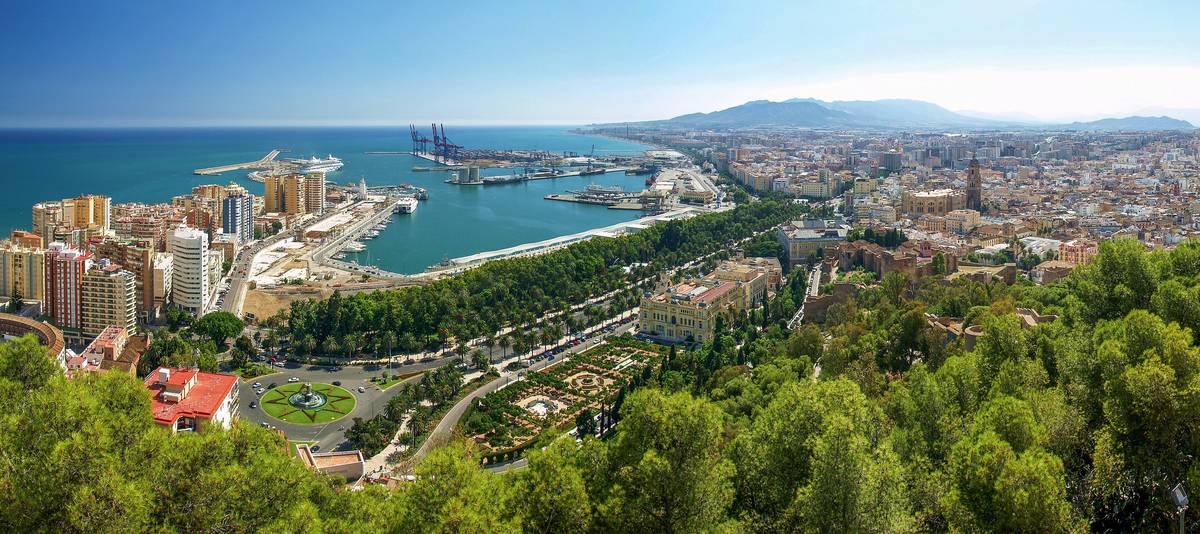
Spend the first 1–2 days in Málaga: the Alcazaba fortress, the Museo Picasso, the old town. Málaga is a calmer start than Seville — fewer crowds, excellent food in the port area. From here you catch the bus to Granada.
The Alhambra is the centrepiece of any Andalusia trip and one of the most visited monuments in Europe. Tickets sell out weeks in advance; buy them on GetYourGuide before you fly. Spend evenings in the Albaicín — the Moorish quarter with views back across to the Alhambra.
Bus or train from Granada. The Mezquita-Cathedral is most beautiful early in the morning — avoid the tourist peak between 11 and 15:00. Buy your ticket online via GetYourGuide for skip-the-line entry. The Judería (Jewish quarter) and the Alcázar de los Reyes Cristianos are half a day well spent.
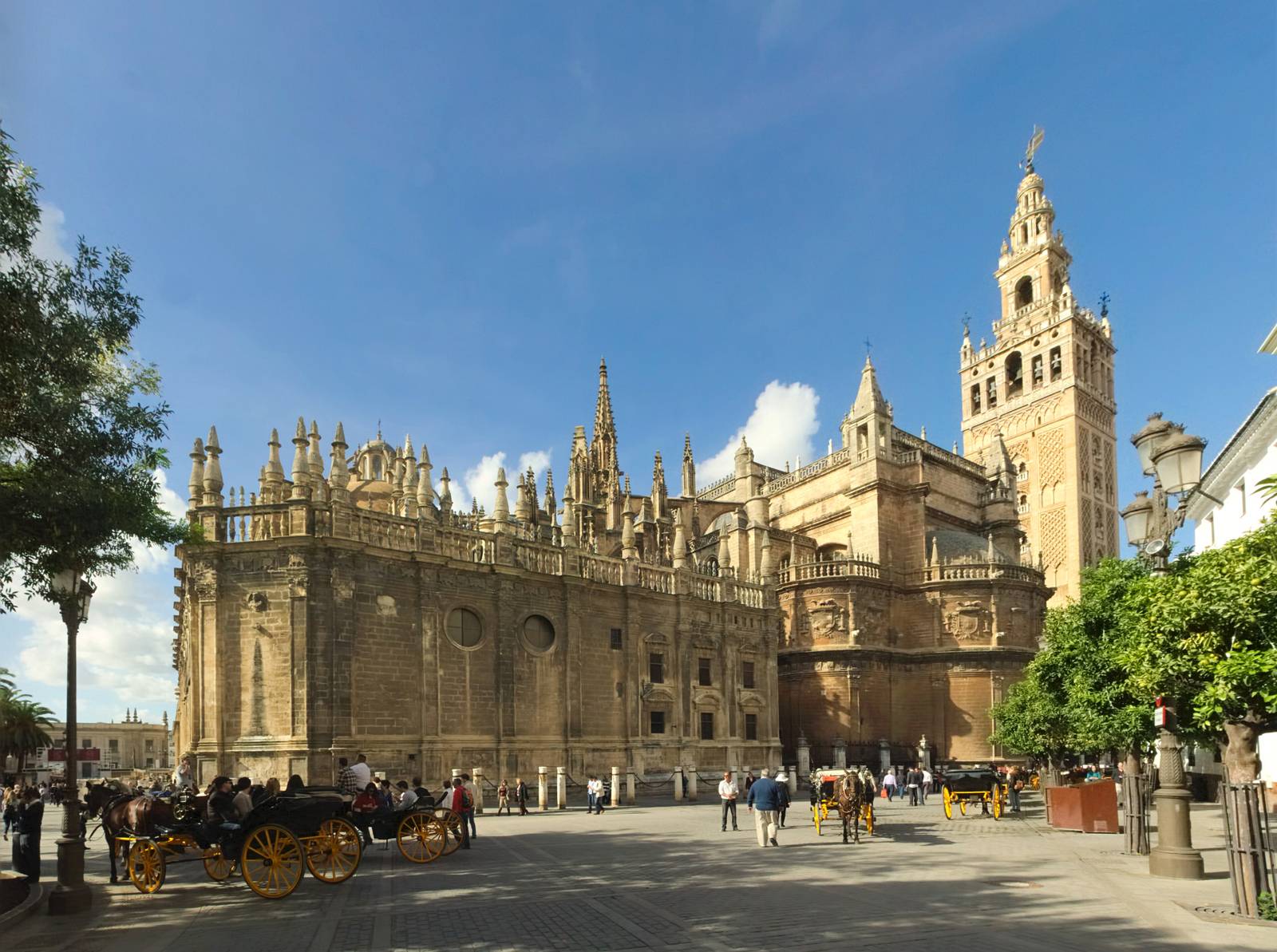
AVE train from Córdoba in 45 minutes. Seville is the largest city on the route and needs at least 2 days: the Alcázar (Royal Palace, UNESCO; book ahead!), the Cathedral with the Giralda tower, and the Barrio Santa Cruz. Return: bus or train to Málaga, flight home.
Find your flight to Málaga (AGP) on Aviasales — enable the price calendar and check a few dates around your target window. Carry-on luggage only instead of checked bags can save €30–60 return. Compare intercity bus and train options on Omio — everything in one view with live schedules. Buy tickets online in advance; on routes to and from Seville, seats fill up in season.
From Málaga airport (AGP) to the city centre there is a Cercanías train (13 min, ~€2) or a bus (30 min). A taxi runs around €15–20. Within each Andalusian city, public transport or your own two feet beat any alternative.
The Alhambra is the absolute priority. The daily visitor quota sells out weeks in advance, especially in spring and autumn. Book as soon as you have your travel dates via GetYourGuide — guaranteed entry and skip-the-line. The same logic applies to the Mezquita in Córdoba and the Alcázar in Seville. GetYourGuide also offers guided tours — worth considering at least for the Alhambra, where the historical context transforms the visit.
An eSIM from Airalo activates before you leave and works the moment you land — offline maps and mobile tickets without hunting for a local SIM. Buy travel insurance from EKTA before departure: it covers medical emergencies, flight delays, and lost or stolen baggage.
Andalusia is at its best in spring (March–May) and autumn (September–October). Temperatures sit around 20–25°C, crowds are manageable, and accommodation is cheaper. In summer (July–August), Córdoba and Seville regularly exceed 40°C — sightseeing in that heat is exhausting. Málaga and the coast are slightly cooler but also packed. Spring also brings Semana Santa (Holy Week before Easter): spectacular processions, but hotels are booked a year in advance and prices double.
A flight to Málaga (AGP) is the cheapest way in — low-cost carriers (Ryanair, Wizz, Vueling) fly here from dozens of European cities. Search on Aviasales with the price calendar view: flexibility of 2–3 days can cut the fare by tens of euros. Fly carry-on only to avoid checked-baggage fees.
No — not if you're following the Málaga–Granada–Córdoba–Seville route. Each city is compact and ideal for walking. ALSA buses and AVE trains connect them efficiently and cheaply. A car is more of a liability here: parking in the historic centres is often impossible or ruinously expensive, and traffic in Seville is a constant headache.
ALSA buses and Renfe trains. Málaga–Granada: bus ~1.5 h, ~€10–14. Granada–Córdoba: bus or train, ~2–2.5 h, ~€12–18. Córdoba–Seville: AVE train, 45 min, ~€10–20. Compare current connections and prices on Omio — buses and trains in one place.
At least 3–4 weeks, and in spring or autumn as much as 6–8 weeks. The Alhambra has a strict daily visitor limit and tickets disappear fast. Book as soon as you have your travel dates via GetYourGuide — guaranteed entry with skip-the-line access.
On a budget (cheap flight, hostels, buses, local bars): roughly €350–500 all-in including the flight. At a comfortable level (3-star hotel, restaurants, all entry tickets): €600–900. Intercity transport (buses and trains) across the whole route typically comes to €50–70 per person.
Spring (March–May) and autumn (September–October). Temperatures around 20–25°C, smaller crowds, lower accommodation prices. In summer Córdoba and Seville regularly hit 40°C — sightseeing is gruelling. Also avoid Semana Santa (Holy Week before Easter) unless you've booked hotels a year in advance.
An eSIM is very handy — activate it before you leave and you have data the moment you land. You'll need it for maps (Google Maps offline is a must in Andalusia's maze-like old towns), mobile tickets, and translation. Buy a Spain or EU plan on Airalo depending on the length of your trip.
Absolutely — both for peace of mind and for your bank account. Emergency medical treatment in Spain without insurance can run into hundreds or thousands of euros. EKTA offers travel insurance with medical cover, flight delay protection, and baggage theft. Buy it before you depart — activation takes minutes.
Maps and mobile tickets working the moment you land.
Read → 🚆Trains and buses across Europe — find the cheapest ticket.
Read → 🚗For coasts and mountain villages the trains don't reach.
Read → 🎫Skip-the-line entry tickets — best booked in advance.
Read → 🛡Peace of mind: medical cover, COVID, baggage, cancellation.
Read → ✈️The cheapest flights across Europe in one search.
Read →A new European city under the lens — how to get there cheaply, what to skip, and which booking saves you the most. No fluff.